The Daily Office
A rhythm of prayer shaped by time, Scripture, and community
The Daily Office is one of the Church’s oldest and most enduring prayer practices, shaped by monastic life and sustained by the conviction that prayer should mark the hours of the day, not just moments of crisis or inspiration. Rather than being spontaneous or self-directed, the Office invites us into a shared rhythm of psalms, Scripture, silence, and spoken prayer, forming faith through repetition and attentiveness over time.
Monastic roots and the Rule of Saint Benedict
The Daily Office finds its clearest early form in the monastic traditions of the Western Church, particularly in the life and teaching of Saint Benedict of Nursia. In the sixth century, Benedict composed what became known as the Rule of Saint Benedict, a guide for communal religious life ordered around prayer, work, and rest. Central to this rule was the practice of praying the psalms and Scripture at fixed hours throughout the day, known as the Divine Office.
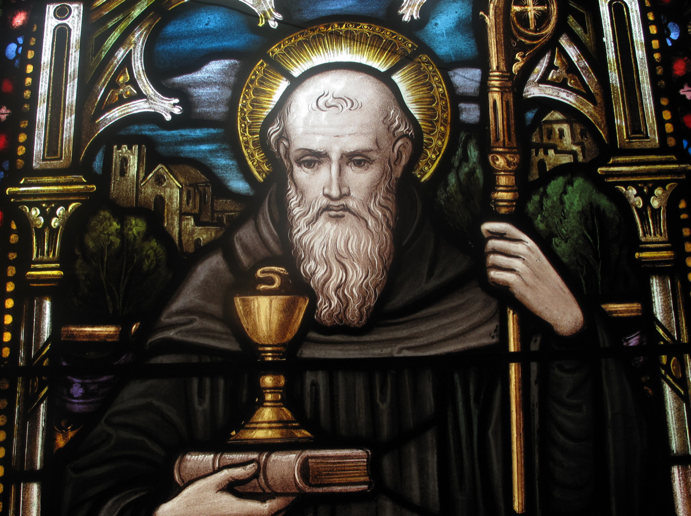
St. Benedict, https://www.benedictinemonksoftaos.org/
Benedict’s vision was not about spiritual heroics but about stability and faithfulness. Prayer was meant to be regular, honest, and woven into daily life. Over time, monasteries prayed as many as eight offices a day, ensuring that the full Psalter was prayed regularly and that Scripture shaped the community’s inner life.
A readable translation of the Rule can be found through the Order of Saint Benedict (as well as through many scholarly and devotional editions available online.
The English Reformation and the Book of Common Prayer
In the sixteenth century, the English Reformation radically reshaped how ordinary Christians encountered daily prayer. Thomas Cranmer, Archbishop of Canterbury, sought to make the Church’s prayer accessible not only to clergy and monastics, but to the entire people of God.
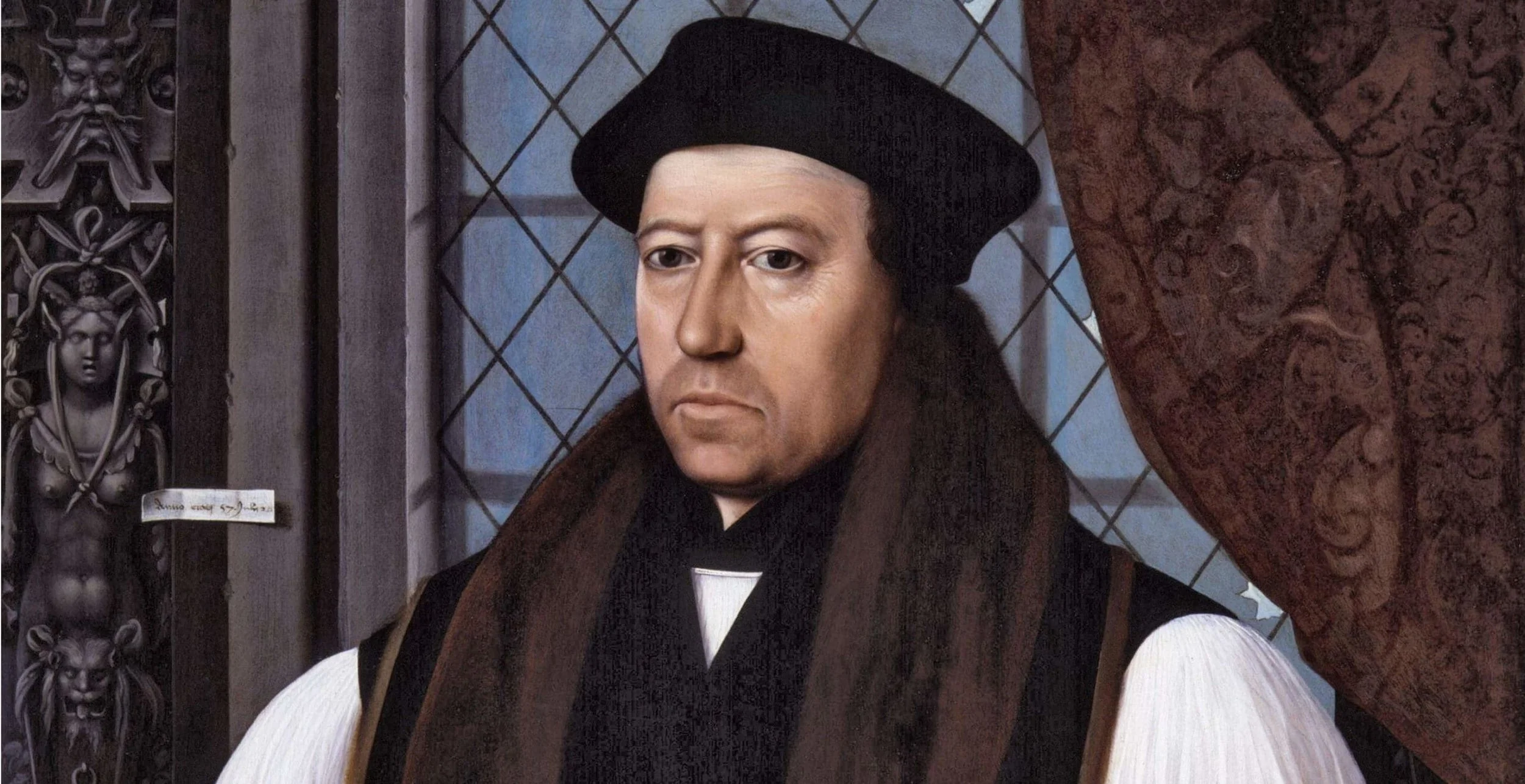
Thomas Cranmer, https://www.historic-uk.com/
In the first English Book of Common Prayer, Cranmer condensed the many monastic offices into two principal daily services, Morning Prayer and Evening Prayer. His goal was clarity, simplicity, and participation. Scripture was read aloud in the language of the people, and the entire Psalter was appointed to be prayed on a regular, organized cycle.
This was a theological statement as much as a practical one, prayer belonged to the whole Church, not just to the ordained. The Daily Office became a shared inheritance, prayed in cathedrals, parish churches, homes, and private rooms.
The structure of the Daily Office
While details vary slightly by tradition, most forms of the Daily Office follow a recognizable structure:
An opening sentence or invitation to prayer
Confession and absolution or assurance
Psalms appointed for the day
Scripture readings, typically one from the Old Testament and one from the New Testament, in addition to a gospel reading.
Canticles (sacred songs often from scripture), such as the Te Deum, Magnificat, or Nunc Dimittis
The Apostles’ Creed
Prayers, including the Lord’s Prayer and intercessions
A concluding blessing or dismissal
This structure is intentionally steady. The Office does not ask how you are feeling before it begins. It gives you words when you have none, and steadiness when your own prayer life feels scattered or thin.
The Office lectionary
At the heart of the Daily Office is its lectionary, the system that organizes Scripture readings across days, weeks, and seasons. Unlike the Sunday Eucharistic lectionary, which focuses on thematic readings, the Office lectionary emphasizes breadth and continuity.
Over the course of two years, in the modern lectionary, those who pray the Office encounter large portions of the Old and New Testaments, along with the full Psalter on a repeating cycle. This sustained exposure allows Scripture to shape the imagination gradually, not selectively.
The lectionary also ties prayer to the liturgical calendar; seasons such as Advent, Lent, Easter, and Ordinary Time are reflected in readings, prayers, and tone, helping personal prayer stay connected to the wider life of the Church.
Praying the Office alone or with others
One of the great strengths of the Daily Office is its flexibility. It can be prayed alone, quietly and faithfully, as a personal discipline. It can also be prayed with others, in families, small groups, parish gatherings, or informal partnerships.
Praying with another person, even occasionally, can be especially powerful. The shared rhythm reinforces accountability and reminds us that prayer is not only private devotion but communal practice. When prayed aloud, the Office becomes a conversation shaped by Scripture rather than individual preference.
Importantly, you do not need to be ordained to lead the Daily Office. A long-standing and beloved saying captures this beautifully:
“If you can read, you can lead.”
The Office belongs to the whole Church, and leadership is simply a matter of hospitality, inviting others into the shared prayer of the Church.
Praying the Office with modern technology
While the Book of Common Prayer remains a treasured and beautiful resource, many people find it challenging to juggle a prayer book, a Bible, and a lectionary chart, especially when first learning the practice. For most people today, apps and online resources are the easiest and most sustainable way to pray the Office.
One of the simplest and most accessible tools is Forward Movement’s “Day by Day” app. It presents the Daily Office in a clean, uncluttered interface and places all readings, psalms, and prayers in one location, making it especially welcoming for beginners or those praying on the go.
For those who want deeper enrichment, Mission St. Clare offers a richly layered approach. In addition to the Office itself, it includes information about saints’ feast days, hymns and musical settings, additional prayers, and theological context. It is particularly well suited for those who enjoy a more expansive devotional experience.
Both approaches are valid. What matters most is not the format, but the faithfulness of returning to prayer again and again.
A living practice
The Daily Office is not about perfection, nor is it about praying every hour or never missing a day. It is about offering time to God as it actually exists, fragmented, beautiful, limited, and real. Whether prayed in silence, spoken aloud, alone, or with companions, the Office gently shapes us through consistency rather than intensity.
It is a practice that grows with you, meeting you differently in each season of life, and reminding you that prayer is not something you perform, but something you enter.